
Assam tea · Bulk & packed
M S Promod Trading Co operates a tightly managed warehouse and trading operation in Bongaigaon, specialising in Assam tea, grains, and fast-moving trade goods for regional distributors and retailers.

M S Promod Trading Co has been designed as a reliable, documentation-ready trading partner with a focus on structured supply and predictable dispatches from its centrally positioned Bongaigaon base.
From the strategic location on Main Road, Bongaigaon, the company services local and regional demand, bridging producers, wholesalers, and last-mile retailers with dependable stock movement.
Inventory is organised in clearly mapped zones for tea, grains, and general goods, enabling faster pick, pack, and dispatch cycles.
The layout is optimised for incoming trucks, forklift-assisted movements, and clean outbound flows, minimising turnaround time for partners.
From invoices and delivery challans to digital communication, every transaction is backed by clear records and professional correspondence.
The focus is on predictable relationships rather than speculative one-offs, aligning stock planning with genuine partner demand.
Inventory is segmented into clear product families so buyers can lock in quantities with confidence, knowing each category is handled with its own storage and handling discipline.

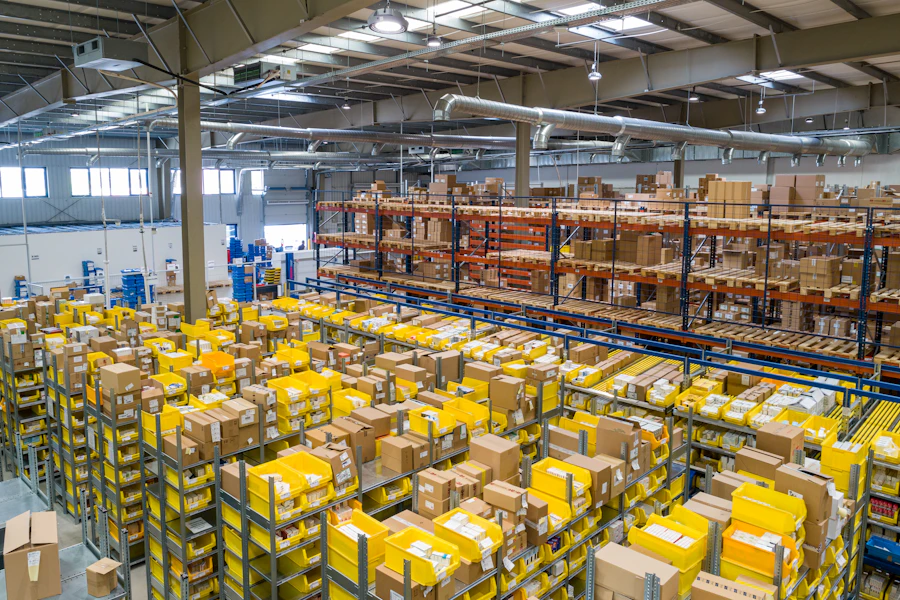



The warehouse and trading processes are structured around clear inbound, storage, and outbound paths, supported by forklift-friendly layouts and documentation-led checkpoints.
Incoming consignments are slotted against pre-defined zones with basic visual checks and documentation verification to maintain traceable movement.
Palletised and sack-based loads are re-positioned with forklift access where required, streamlining internal movement and reducing manual load.
Outbound orders are collated in staging zones with clear demarcation between categories, ensuring efficient truck loading and minimal rework.
Invoices, delivery challans, and supporting documents are aligned with partner expectations, with phone and email support for coordination.

A visual snapshot of the industrial environment: structured aisles, forklift access, and a clean back-office ensuring paperwork and operations stay in sync.


Cartonised FMCG and general merchandise arranged for quick cycle counting and order picking.
A disciplined office layer supports documentation, billing, and partner communication, keeping warehouse activity and paperwork aligned.

The warehouse and trading model is tuned to practical expectations: reliable communication, aligned paperwork, and consistent stock handling for repeat partners.
Order planning is easier when dispatch timing, loading alignment, and basic documentation are predictable, which is exactly the style followed here.
Consistency in tea handling and documentation support makes it easier to maintain a stable supply chain for retail and bulk clients alike.
Mixed-category, truck-ready loads are planned with practical constraints in mind, keeping dispatch windows realistic and communication clear.
A quick reference to common questions about categories, logistics, and engagement so first conversations can focus on specifics instead of basics.
This privacy overview focuses on the limited information typically shared during trading and warehousing discussions and how it is treated.
M S Promod Trading Co engages primarily with business partners and handles only the information required to explore and execute trading relationships, such as contact details, order-related information, and documentation data.
Basic business details, contact information, and order-related information shared via phone, email, or in-person discussions for the purpose of trading and logistics coordination.
Information is used solely to evaluate fit, plan orders, issue invoices and delivery documents, and coordinate logistics for agreed trading activity.
Records may be kept in physical or digital form for operational, accounting, or compliance reasons and retained for periods appropriate to legal and practical needs.
Information may be shared with logistics, accounting, or compliance-related service providers only as needed to fulfil obligations arising from trading relationships.
Phone calls and emails may be used to discuss requirements, confirm orders, share documentation, and address operational queries related to ongoing or planned activity.
Partners can request clarification on what information is kept or ask for updates to their contact details by reaching out through the published phone number or email.
This overview is intended as a business-friendly explanation of how information is generally treated and does not constitute legal advice; specific practices may evolve with regulatory or operational needs.
Trading relationships work best when both sides have a clear understanding of expectations around orders, logistics, and documentation.
The following points describe general themes that usually shape trading and warehousing engagements with M S Promod Trading Co and are intended as a high-level orientation.
The company focuses on trading and warehouse-based handling of specified categories, including Assam tea, grains, and trade goods, with logistics coordination tied to agreed orders.
Orders are typically confirmed via phone or email, with key details such as categories, quantities, and dispatch expectations aligned prior to execution.
Pricing, payment terms, and any applicable taxes or charges are discussed directly with partners and documented in corresponding invoices or agreements where relevant.
Responsibilities around transportation, loading, and risk transfer are clarified case by case, with dispatch aligned to mutually agreed arrangements and schedules.
Partners are encouraged to conduct reasonable checks at the time of receiving goods, and any concerns or claims should be raised promptly through the usual communication channels.
Either side may seek adjustments or discontinuation of an engagement, subject to the status of existing orders, obligations, or commitments already in motion.
This summary is designed for orientation only and does not replace any specific written terms, purchase orders, or agreements that may govern particular transactions or relationships.